Moz Q&A is closed.
After more than 13 years, and tens of thousands of questions, Moz Q&A closed on 12th December 2024. Whilst we’re not completely removing the content - many posts will still be possible to view - we have locked both new posts and new replies. More details here.
Ranking for keywords in multiple zip codes
-
Hello,
We are trying to rank for keywords locally. We are on the edge of four zip codes in our area and are competing with businesses in those zip codes. Should we track each keyword separately for each zip code, or just one zip code we're in?
-
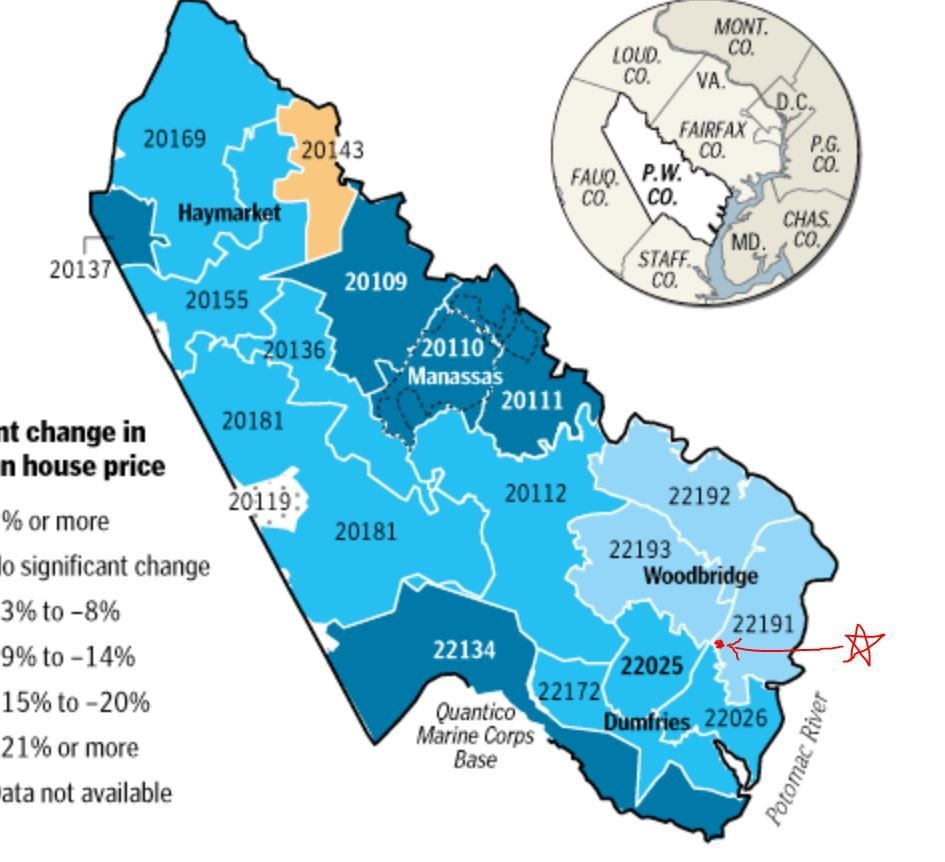
@miriamellis We are located in the 22191 zip code and on the edge of three other zip codes - 22193, 22025, and 22026. We have been using Moz's keyword research tool. Do you recommend that we create keywords just for the zip code we are located in, or should we create keywords for each of the four zip codes we're around? We're trying to see how we're doing in those areas against other repair shops.
-
@ifixcars Good morning! Can you please add a little more detail to your question about tracking zip codes? Where are you tracking them? In a Moz product? In Google Analytics? Please, feel free to share as much as you can. Thank you!
-
If you need to create GMB for each zip code and that addresses you have to put on your website along with the respective maps. Don't forget to add LocalBusiness schema for each addresses. I hope this help you to rank.
Got a burning SEO question?
Subscribe to Moz Pro to gain full access to Q&A, answer questions, and ask your own.
Browse Questions
Explore more categories
-
Moz Tools
Chat with the community about the Moz tools.
-
SEO Tactics
Discuss the SEO process with fellow marketers
-
Community
Discuss industry events, jobs, and news!
-
Digital Marketing
Chat about tactics outside of SEO
-
Research & Trends
Dive into research and trends in the search industry.
-
Support
Connect on product support and feature requests.
Related Questions
-
Minor languages keyword research
Hello, I am in charge of doing a keyword research for several small countries in Europe, namely Hungary, Estonia and Latvia.
Keyword Research | | Lvet
I normally use the Keyword planner for Google Ads, but for Hungarian, Estonian and Latvian this tools seems to find no results for the keywords related to my websites. For example, in Hungarian the keyword "ajak toltoanyagok" ("lip fillers" in English) doesn't give any results (and yes, I am targeting my searches to Hungary and Hungarian). I have the same problems with Latvian and Estonian. Is there another tool that I could use and that could give me better results? Help! Cheers Luca rONwtZt0 -
Reverse rankings check
Usually, we will have a set of keywords of which we check rankings for a designated website... however, is there a tool that is able to find all the keywords a website is currently ranking on the top page of Google for?
Keyword Research | | Gavo0 -
Price Comparison Website And Keywords
I run a price comparison website for a small niche at http://cdkeyprices.com I am targeting keywords for the specific products I am comparing the price/merchants on. On a typical page I would have a price column, product name, the merchant and a buy button. Buy button is affiliate linked to the merchant. The product name in the product column is the name from the actual website I am tracking. As such, my keyword was appearing sometimes up the 30 times. I've took it down some months ago but was wondering if this was a bad move. I was concerned Google would think I was stuffing the keyword. I've only just gotten into SEO the past few months so was not able to see any changes. Should i put the product column back up or would it be considered over optimization?
Keyword Research | | MrPenguin0 -
Longtail keyword definition seems fuzzy?
So we all know about longtail keyword vs. short tail. However, it seems that the definition is a bit inconsistant. Some people say longtail keywords are keywords that get very low amounts of traffic, others that they are key phrases with 2 or more words. And others add to this that they have high conversion rate but describe specific features, product, service, model # etc. In an ideal model I suppose all of these things would be true. As keyword length increases, traffic tends to decrease, keyword is more specific pointing at features, model#, specific product etc and therefore the conversion rate is a bit higher as well. However, the data isn't a perfect curve. I will see keywords that get 18,000 searches but have 4 words. And then I will see single word key phrases that get <10 -20 searches a month. What am I to consider these? Its like they fit half the criteria. Any comments on this would be helpful and appreciated. I suppose the real question I am after is - it seems like the real definition of a long tail keyword cant be any of the above traits of a long tail keyword. How do you really define a long tail keyword in all circumstances (without it being this subjective idealized definition based on a perfect model) and where would the keyword circumstances (lots of words but high traffic, and low traffic but 1 word) fall in the graph? Center?
Keyword Research | | eastco0 -
Include Location in Keywords?
I understand Google's local search automatically searches keywords with the location you are searching from. For example if I'm searching from Calgary and query "best shoe repair", Google knows I'm searching from Calgary and presents Calgary based results. I'm using Google's new Keyword Planner tool which allows for city based search results, meaning I don't have to include "Calgary" in the keywords I submit. The question I have is should I be attaching "Calgary" to my keywords for on-page optimization, and why or why not? Any help would be greatly appreciated!
Keyword Research | | reidsteven750 -
Branded vs Generic keywords - is Google treating their rank equaly!?
Several times I have noticed that website receiving sort of a rankings drop penalty for certain wrongly built on-page strategies that involves keyword stuffing, wrong keyword density(too much) etc. The question is - how you guys think - is branded keywords receiving the same treatment from Google then generic ones? And here is why - for one popular brand I see that they ranking for their brand keyword very high(1th) but keyword density is awful - more then 10%. So, my guess is - if this keyword density you would apply for generic keyword you will end up nowhere to be found for it! Is that could be truth? Any experiments info about that? thanks and regards, Jungles
Keyword Research | | Jungles0 -
How do you check your KW rankings?
I'm currently using the PRO campaigns to track my main keywords. However, I'm trying to do some research on KW opportunities, and having no luck finding a way to conveniently check rankings for new keywords. What tool do you use to get ranking results for large keyword lists?
Keyword Research | | AdoptionHelp0 -
How do you optimize for compound keywords
What is the best way to handle keywords like "switchplate covers"? The key word may be seen as either a 2 or 3 word phrase, depending how you handle the compound term: "switch plate" or "switchplate" In google KW it shows different results for switch plate vs switchplate as well as using cover vs covers. I've tried using all the variations in my descriptions, titles and H2s but I think this is diluting them all. Can anyone show me best practice guidelenes or examples of good solutions to these kinds of compound key words? Thanks Handcrafter
Keyword Research | | stephenfishman0